Why a QR Code Seating Chart Is the Future of Event Planning
Event seating has always been a make-or-break detail. When guests can find their table quickly, the event feels organized, premium, and welcoming. When they cannot, the first minutes turn into a bottleneck at the entrance, staff get pulled into name searches, and the timeline starts slipping.
That is exactly why QR code seating charts are becoming the future of event planning. They remove the crowding problem, reduce mistakes, and allow last-minute updates without reprinting anything. Instead of standing shoulder-to-shoulder around a printed board, guests scan, search, and walk to their table in seconds.
What is a QR Code Seating Chart?
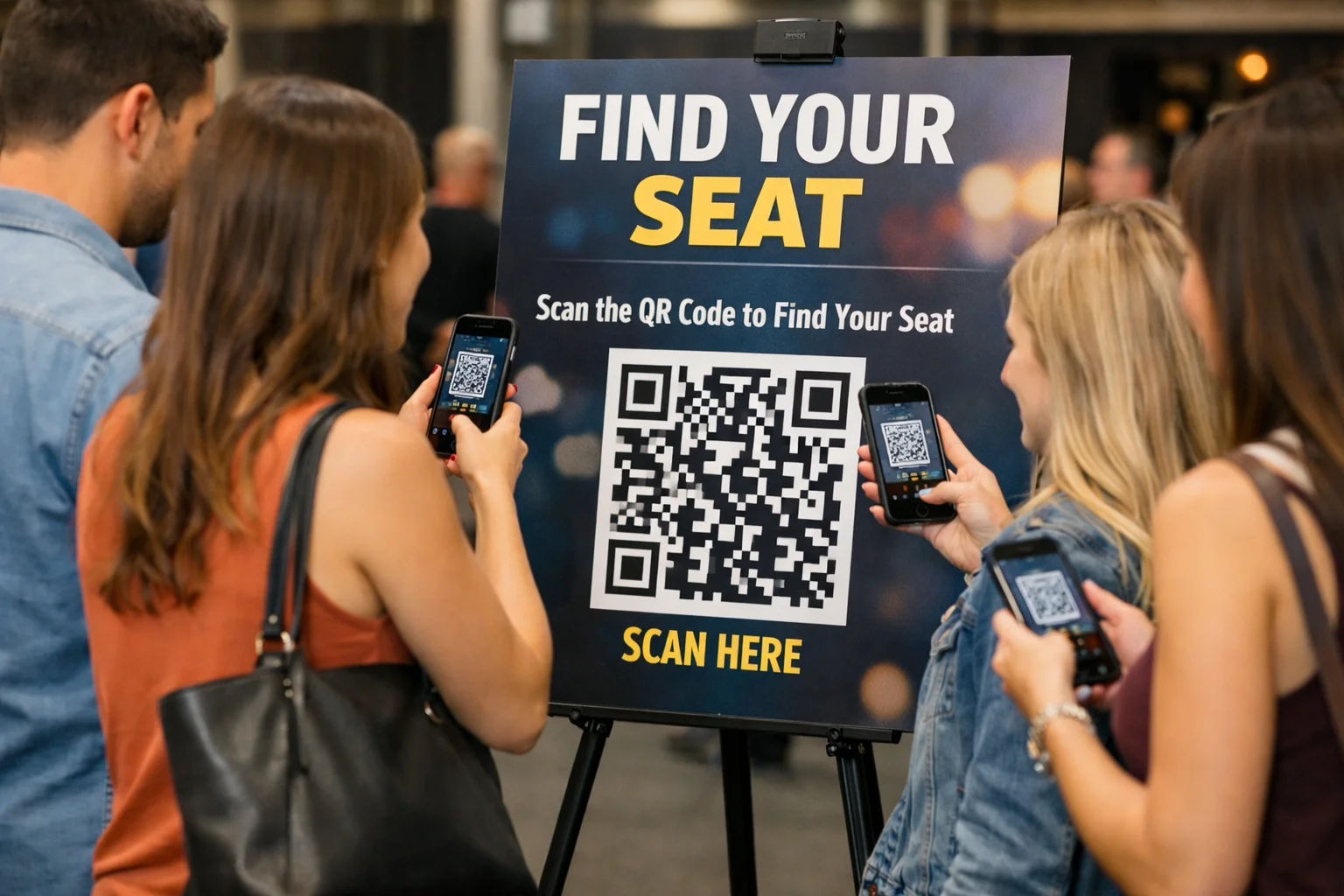
A QR code seating chart replaces a static poster board with a scannable code that links to a digital seating lookup page. Guests use their smartphone camera to scan the code, which opens the information in a browser to reveal their assigned table and seat.
Unlike traditional printed charts, a QR-based system offers dynamic flexibility. When seating changes, there is no need to rewrite escort cards or reprint boards. Guests simply see the most up-to-date details the moment they scan.
For planners, it means fewer questions, fewer entry delays, and a seating plan that can change in real time when real life happens.
How the Process Works for Guests
From the guest’s perspective, the process is simple, familiar, and requires zero technical training:
Display: A QR code is placed at the entrance, on signage, or even on physical invitations.
Scan: The guest opens their phone camera, points at the code, and taps the link.
Search: A mobile page opens where the guest searches for their name to see their assignment.
Why Planners Are Shifting Away from Printed Boards
Printed seating charts are not failing because they look bad; they fail because they are static and force everyone into the same physical space at once. Modern planners are moving toward digital solutions for several key reasons:
Less entrance congestion: Guests find seats without crowding around a single display.
Real-time updates: Adjustments can be made digitally without expensive last-minute reprints.
Better accessibility: Digital charts support screen readers and allow guests to zoom in on text.
Sustainability: Lower printing waste and reduced costs associated with guest list changes.
In practical terms, QR code seating is a crowd-management tool and a stress-reduction strategy, rather than just a modern aesthetic touch.
Real-World Scenarios and Success Stories
The following examples reflect common event-day situations where digital lookup outshines physical signage.
The Wedding Entrance Rush
Nina and Chris hosted a 210-guest wedding. Their first plan was a large printed board, but it created a "wall of people" effect as guests struggled to read tiny fonts, causing a massive line. At their next family celebration, they used a QR code. Guests scanned while walking, stepped aside to search, and the entry stayed clear.
The Last-Minute Plus-One Problem
A planner named Farah managed a corporate dinner where unexpected guests arrived. With a printed chart, this triggers a scramble to scribble changes by hand. With a digital chart, Farah updated the plan immediately, and guests saw their new assignments on their phones instantly.
The Visibility Challenge
At a recent gala, the seating chart used a stylized font that was hard to read in dim lighting. Guests had to lean in close, blocking others. Digital seating solves this by allowing guests to adjust phone brightness and search by name instead of scanning a long, complex list.
Key Benefits vs. Physical Seating Charts
When comparing the two methods, the digital approach provides significant advantages in efficiency and inclusion.
Faster Lookup: Search functions are significantly faster than visual scanning for large guest counts.
Dynamic Control: QR seating eliminates the risk of guests seeing outdated versions of the plan.
Space-Saving Design: QR signage has a minimal footprint and can be placed in multiple locations.
Physical boards create natural bottlenecks. QR seating spreads the process across many devices, keeping entryways clear and reducing stress for both staff and hosts.
Implementing QR Excellence with DigiSeats
DigiSeats is built specifically for these modern event needs. It transforms the traditional chart into an interactive experience that balances guest simplicity with organizer control. It is an ideal solution for weddings, corporate events, and galas where a professional experience is paramount.
Practical Tips for Event Day
Multiple Stations: Place several QR signs around the venue to prevent clustering.
Clear Call-to-Action: Use bold text like "Scan for Your Seat" to guide guests.
Backup Plan: Keep a small physical list at the check-in desk for guests with low phone batteries.
Frequently Asked Questions
Do guests need a special app?
No. In most setups, guests simply use their native phone camera to open a web link; no downloads are required.
Is this technology only for weddings?
While popular for weddings, it is highly effective for conferences and corporate dinners where entry flow is critical.
What is the biggest reason for this shift?
The transition is driven by the need for speed and flexibility. QR seating charts combine real-time updates with better crowd flow, making them the definitive future of event planning.